|
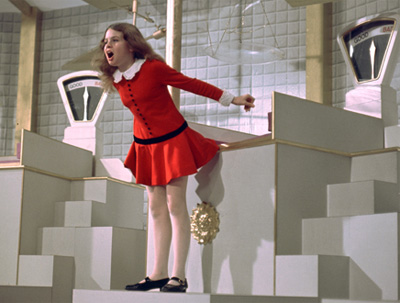
| Do the holidays transform your foster or adopted child into Veruca Salt? | |
|
|
|
Those of us who parent adopted or fostered younguns have all probably been exposed to this commonly held
idea that somehow our children should be "grateful" to us for "saving" them from a life of [insert something awful here - poverty, addiction, homelessness, abuse, neglect, etc.] Most of us who have taken the time to learn more about foster care and adoption roll our eyes at people who tell us how lucky our kids are. We either tell them "No, we're the lucky ones", or we regale them with a lecture about how even though adoption or foster care can be positive things they are also rife with grief and loss. Or we grit our teeth and just move on. We certainly do not expect our kids to be grateful towards us for "saving" them, we don't expect them not to feel grief or resentment about their being with us instead of their birth family, and we try not to expect them to be any more grateful than a non-adopted child would be. But what about when our foster or adopted children actually act the exact opposite of this myth of the grateful adoptee?
What about when they act downright spoiled and entitled?
I have noticed with my older foster son that the holidays bring up all kinds of issues. One challenge for us is that he starts to get the "gimme gimmes" (also known as the "I wants") and seems more than a little like Veruca Salt from
Charlie & the Chocolate Factory:

No matter what we buy him, it isn't enough. It's not the right thing. It's not as much or as good as what he should have gotten. In fact, a full two months before Christmas and Chanukah, he was telling us that he already knew we weren't going to get him anything and that the holidays were going to suck. He even tried to tell us we didn't get him anything last year (um, yeah, right!)
It's early November and I can see the selfishness rising, rising, rising like a tide that is about to attempt to flood our family life emotionally. But is it really selfishness? Sure, it's bratty, spoiled, and entitled behavior... but I have some suspicions about why this is the case with so many foster and adopted kids:
- Kids who really did not have enough when they were with their birth families, whether they were short on food or were not able to celebrate the holidays due to poverty, have anxiety about scarcity. Even though part of them knows things are different now, they are trying to prepare themselves ahead of time for the massive disappointment of going without. The holidays were always a let-down, so it's better to prepare themselves for another let-down than to let themselves be hopeful. Therefore, they start to focus on all the things they want but that their parents won't get them.
- Foster children or children adopted at an older age may worry that they are not going to get treated equally to biological family members when it comes time for the holidays.
- Kids who had scarcity in their previous lives may have a really obsessive relationship with the few things their birth family did provide (such as presents at holidays, or having nice clothes even if they went without meals). Kids who had scarcity before but in their adoptive or foster homes have since gotten used to having lots of "things" may have developed an unhealthy level of investment in material things, combined with lack of confidence that they will always have their needs met. Their self-esteem may be greatly based on what they own.
- Foster kids and kids who live in group homes or orphanages rarely get to own much of anything that belongs exclusively to them and that they can trust will remain with them. If this is part of your kid's history it may cause them to seem over-attached or under-attached to belongings.
- Children may miss what they remember of their birth family's holiday traditions, even those that have nothing to do with gifts. Perhaps a child who's acting like an entitled brat about what they expect to get as gifts at the holidays is actually a child who is simply mourning the loss of the smells, sights, tastes, and feelings of holiday celebrations with their birth family and hoping to get some solace through extra attention from you or from material comforts like toys or candy.
- I've been told many times that kids who have been through a lot of loss and trauma often get what is dismissively referred to as a "victim complex." As they enter puberty and beyond they start to feel like the world owes them something - Maybe a lot of somethings. They may feel like having money or material things they want can help provide restitution for the ways in which they have suffered in their life.
- Those of us whose foster or adopted kids have behavioral and emotional issues may be more than a little tempted to help quell the child's outbursts with material rewards (toys, treats, etc). This may lead them to expect that an outburst or causing a scene at the store will result in them getting what they want. Also, some kids may have had birth parents who were unable to set limits with them, resulting in kids experiencing that the way to get their desires met is to act demanding.
- Foster kids, in particular, may be very aware of the ways in which their lives are different than the lives of their peers. Having the toys and clothing their peers have, or even more and better things, may help them feel like they'll fit in better or be able to override any stigma that comes from being a foster child.
- Let's face it, we may bring some of this "gimme gimme" awfulness on ourselves by overdoing holidays and buying too many toys when our kids first arrive, as a way of making up for not having a lot in the house for them yet, or as a way of helping them not feel as sad about not being without their birth families for the holidays. We may unconsciously buy them more than they need in order to make them like us, inadvertently teaching them that the holidays are all about their every want being fulfille.
And let's not forget, foster and adopted kids are children first and foremost. Most kids just get crazy around holiday times, just ask any parent you know. Selfishness is a trait all parents have to teach their children to overcome because children are inherently ego-driven creatures and most of us are raising them in a very consumerist culture. This is not exclusive to children from trauma backgrounds or who are fostered or adopted. But there are many ways to teach children to question consumerism, to feel empathy for others, and to engage in acts of charity.
An upcoming post will focus on how our families can find meaning in the holidays
beyond gift-giving. You can help me build that post by answering these questions and encouraging your friends to do the same!
How do you battle the "gimme gimmes" around the holidays?
How do you instill in your children, whether biological or non-biological, a sense of holiday meaning that goes beyond gifts?
How do you teach altruism, charity and sharing to children whose histories have led them to have a fear of scarcity?

 (I always lust after this stuff at Whole Foods!) to Blended Beauty and Oyin Handmade.
 I reviewed in this post. Many of their products use only natural fragrances and they have a whole line of products for kids specializing in mixed-race curly hair. Good only through Thanksgiving (expires 11/24).


 ornament from Hallmark's Doorways Around the World series.